

Common eSIM Myths Travelers Should Know (2026 Guide)
eSIM has quickly become one of the most popular solutions for staying connected while traveling. However, despite its rapid adoption, many travelers still misunderstand how it actually works.
These misunderstandings — often based on outdated information — can lead to hesitation, poor choices, or unnecessary costs.
In this guide, we’ll break down the most common eSIM myths and explain the truth behind each one, so you can confidently choose the right setup for your trip.
1. Myth #1: eSIM Is Slower Than Physical SIM
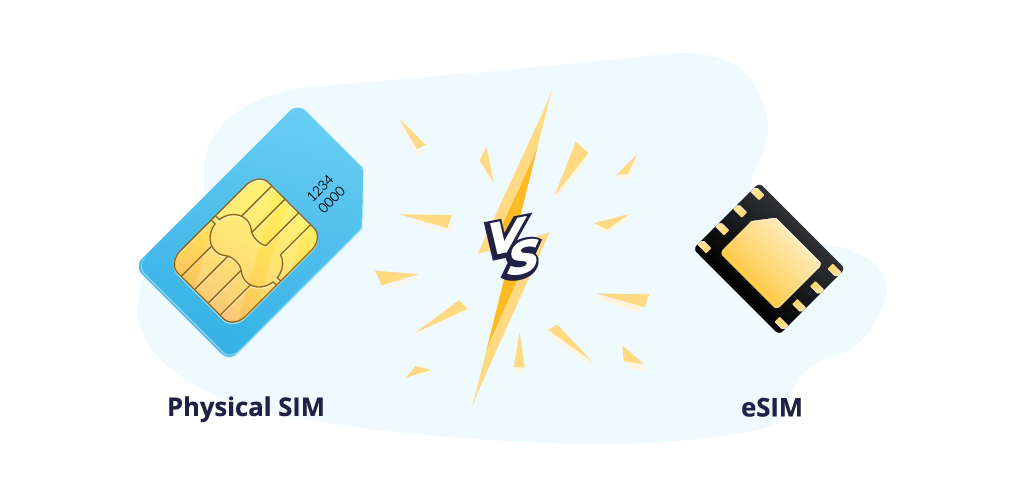
eSIM vs Physical SIM
This is one of the most common misconceptions.
The truth: eSIM is not slower than a physical SIM. Speed depends entirely on the network provider and local infrastructure — not the SIM format.
Your connection quality is influenced by factors such as signal strength, network congestion, and carrier partnerships. In fact, many eSIM providers connect to strong local networks, delivering excellent performance.
If you're unsure how much speed or data you actually need while traveling, it's helpful to understand real usage patterns in advance. You can explore this in a practical guide on how much data you actually need for travel.
2. Myth #2: eSIM Is Always More Expensive
At first glance, some travelers feel that eSIM plans are more expensive than local SIM cards.
The truth: eSIM often becomes more cost-effective when you consider the full experience.
With eSIM, you avoid airport markups, eliminate the need to find local stores, and reduce the risk of unexpected roaming charges. More importantly, you can compare plans before your trip and choose the one that fits your needs.
If budget is your main concern, there are many options available. This breakdown of affordable eSIM plans for travelers can help you find the best value.
3. Myth #3: eSIM Has Limited Coverage
Some people still believe eSIM only works in a few developed countries.
The truth: eSIM coverage is now global and continues to expand rapidly.
Most providers offer coverage across dozens — even hundreds — of destinations, including regional and multi-country plans.
If you're planning a trip across multiple countries, it's worth checking where your plan will work. This guide on where eSIM works globally explains coverage in detail.
4. Myth #4: eSIM Cannot Make Calls
This is one of the most misunderstood aspects of eSIM.
The truth: Most travel eSIMs are data-only, but that does not mean you cannot make calls.
Today, most communication happens through internet-based apps like WhatsApp, Messenger, or Zalo. These apps allow you to make voice and video calls using your data connection.
If you're unsure about how calling works with eSIM, it's important to understand the difference between data-only and voice-enabled plans before choosing.
5. Myth #5: eSIM Is Difficult to Set Up
Many users hesitate to try eSIM because they think it’s complicated.
The truth: eSIM setup is quick and simple.
In most cases, it only involves scanning a QR code, confirming installation, and turning on mobile data. The entire process usually takes just a couple of minutes.
Compared to buying and inserting a physical SIM card, this is often much easier — especially when arriving in a new country.
6. Myth #6: eSIM Cannot Be Used Across Multiple Countries
This is no longer true.
The truth: Many eSIM plans are specifically designed for multi-country travel.
This allows you to move between destinations without changing SIM cards or losing connectivity.
For example, travelers visiting multiple countries in Europe often rely on multi-country eSIM plans to stay connected throughout their journey.
7. Myth #7: eSIM Drains Battery Faster

eSIM Drains Battery Faster
The truth: eSIM does not significantly impact battery life.
Battery usage depends much more on signal strength, app activity, and screen time than on whether you use eSIM or a physical SIM.
There is no meaningful difference in power consumption between the two.
8. Myth #8: eSIM Is Not Reliable
Some travelers worry that a digital SIM might be less stable.
The truth: eSIM is highly reliable and widely used by major telecom providers around the world.
Because it is built into your device, it also avoids common issues such as SIM card damage or loss.
For frequent travelers, this reliability is a major advantage.
9. Myth #9: You Can Only Use One eSIM
The truth: Most modern smartphones allow multiple eSIM profiles.
You can store several plans and switch between them when needed. Many devices also support using a physical SIM and eSIM at the same time.
This flexibility makes eSIM especially powerful for people who travel frequently or manage multiple numbers.
10. What Is the Best Way to Use eSIM Today?
Based on real-world usage, the most effective setup is combining both technologies:
- Main SIM → Calls and SMS
- eSIM → Mobile data
This setup allows you to receive OTP messages, keep your primary number, and avoid expensive roaming charges.
For example, if you're traveling to Japan, you can prepare your data connection in advance and activate it instantly when you arrive by using a plan like a Japan eSIM.
11. Final Thoughts
Understanding these eSIM myths helps you avoid confusion and make better decisions when choosing a travel connectivity solution.
eSIM is not just a trend — it represents a shift toward more flexible, convenient, and efficient mobile connectivity.
By separating myths from reality, you can confidently use eSIM and focus on enjoying your trip without connectivity worries.
Frequently Asked Questions (FAQ)
1. Is eSIM slower than a physical SIM?
No, speed depends on the network provider and signal quality, not the SIM type.
2. Is eSIM more expensive than a normal SIM?
Not always. eSIM can be more cost-effective when considering convenience and avoiding roaming fees.
3. Does eSIM support calls?
Some eSIM plans support calls, but most travel eSIMs are data-only. You can still make calls using internet apps.
4. Can eSIM work in multiple countries?
Yes, many eSIM plans support regional or global coverage.
5. Is eSIM reliable for travel?
Yes, eSIM is widely used and reliable across most countries.
6. Can I store multiple eSIM profiles?
Yes, most modern smartphones support multiple eSIM profiles.